Taber Ranch Project
Historic Gains for Nevada Conservation
Courtesy Jim Giudici
The Nevada Waterfowl Association (NWA) is launching a major new research and training initiative focused on one of the most important conservation challenges in the western United States: how to effectively manage wetlands in water-limited, terminal basin systems for the benefit of migratory waterfowl and shorebirds.
From Water Acquisition to Water Management
More than three decades ago, NWA played a central role in securing passage and implementation of Public Law 101-618, which authorized the acquisition and transfer of agricultural water rights to support wetlands in Lahontan Valley, including Stillwater National Wildlife Refuge and Carson Lake & Pasture. This effort ultimately became the largest water acquisition program in National Wildlife Refuge history, ensuring a long-term water supply for approximately 25,000 acres of critical wetland habitat. With this water acquisition effort now recently concluded, the challenge ahead is no longer acquisition, but optimization—how to most effectively use limited and highly variable water supplies to produce high-quality habitat for migratory waterfowl and shorebirds.
A New Challenge for Desert Wetlands
Nevada’s desert wetlands present unique management constraints not found in more water-abundant regions. These terminal systems depend entirely on available inflows and associated drains, with no downstream outlet, making water management decisions especially consequential. The same challenges extend across the broader Great Basin and Intermountain West, including areas such as the Klamath Basin and Great Salt Lake. As water becomes increasingly limited, there is a clear need for applied science that directly informs how to manage these systems to maximize habitat value for birds throughout the annual cycle.
A Unique Opportunity at Stillwater
Recent land acquisitions within Stillwater National Wildlife Refuge have created a unique opportunity to address this need. Former ranch properties, including the historic Taber Ranch, now provide a foundation for developing a field-based research and training station dedicated to desert wetland management. These sites offer the infrastructure, water control capabilities, and landscape context necessary to conduct applied research, support hands-on training, and evaluate habitat outcomes under different water management scenarios.
Launching the Taber Ranch Initiative
To initiate this effort, an anonymous donor has committed $500,000 over five years as seed funding, with the potential for continued support based on progress. This investment provides a critical starting point for building a long-term program focused on science, training, and partnership development, with the ultimate goal of becoming self-sustaining.
Leadership and Expertise
NWA has engaged Chris Nicolai, PhD, as Project Manager to lead this initiative. Dr. Nicolai has extensive experience working in Lahontan Valley and across the Intermountain West, with a professional background spanning wetland ecology, waterfowl and shorebird research, and applied habitat management. In this role, he will develop and implement applied research programs, build partnerships with federal and state agencies, non-governmental organizations, academic institutions, and private landowners, and establish training opportunities for students and natural resource professionals focused on wetland management in arid systems.
Building Strategic Partnerships
Initial efforts will focus on building collaborative relationships with partners such as the Nevada Department of Wildlife, Ducks Unlimited, California Waterfowl Association, and Nevada Audubon Society, as well as universities including the University of Nevada, Reno and Bemidji State University. Engagement with private landowners and duck clubs will also be an important component of this effort. These partnerships will support the development of research and training programs that directly inform wetland habitat management and conservation outcomes for migratory birds.
Looking Ahead
This initiative will begin this summer, with initial efforts focused on partnership development, program design, and early project implementation. NWA will continue to provide updates as progress is made. Individuals or organizations interested in supporting or participating in this effort are encouraged to contact Dr. Nicolai at: cnicolai@nevadawaterfowl.org.
This effort represents a critical next step in ensuring that limited water resources across the West are used as effectively as possible to sustain migratory bird populations.
2026 Wood Duck Cleanout
Courtesy Julie Bless
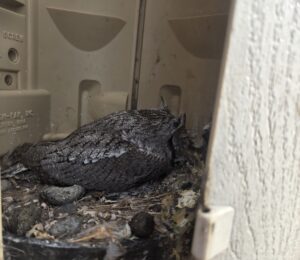
The 2026 Wood Duck Cleanout Day had 15 volunteers on hand for the Nevada Department of Wildlife (NDOW) event. This year’s volunteers collectively traveled more than 500 miles and contributed approximately 70 volunteer hours. This translates to approximately $3,500 in potential third-party in-kind grant matching. On average, volunteers spent five hours on box cleanouts. Eleven properties were covered during the day’s activities out of 17 available. In total, 206 boxes were checked. Additionally, two Western Screech Owls were observed occupying boxes (see attached photo).
It was noted that many poles need attention, and replacing older wooden boxes with new plastic ones should be prioritized in addition to annual cleanouts. Constraints include limited tools, storage for new boxes, and available NDOW staff time. NWA could help fill these gaps to assist with repairs done, and Julie Bless, Staff Conservation Educator, Nevada Department of Wildlife would appreciate your feedback at: JBless@NDOW.org.
Nevada Swan Harvest Data
Courtesy Russell Woolstenhulme